
When Home Lives in More Than One Place
Immigration, Identity, and the Emotions We Carry
Moving to a new country is often described as a beginning: a new home, new opportunities, a new chapter.
But beginnings can also contain endings.
You may be building a life you once hoped for while quietly grieving the language, relationships, routines, professional role, or sense of familiarity you left behind. You may feel grateful and heartbroken at the same time—proud of how far you have come, yet exhausted by how much effort everyday life can require.
These mixed emotions do not mean you made the wrong decision. They may simply mean that something important changed.
What Is Acculturation?
Acculturation is the ongoing process of adjusting to a new cultural environment while navigating your relationship with your culture of origin.
It can influence language, identity, family roles, values, communication, belonging, and even how emotions are understood or expressed. It is not a single stage that you complete. It is an evolving process that may feel different across various periods of your life.
Something that felt manageable when you first arrived may become more emotionally present years later—during a visit home, a family milestone, an experience of discrimination, a career transition, or a moment when you realize that both you and the place you once called home have changed.
Acculturative Stress Is More Than Culture Shock
Acculturative stress describes the emotional and practical strain that can arise while learning to live within a new culture.
It may appear as loneliness, guilt, irritability, sadness, self-doubt, mental fatigue, difficulty concentrating, or feeling constantly alert to whether you are speaking, behaving, or responding “correctly.”
The body may carry this adjustment too. When daily life repeatedly involves translation, unfamiliar systems, uncertainty, problem-solving, or monitoring how others may perceive you, the nervous system may have fewer opportunities to settle.
This does not automatically mean something is wrong with you. It may mean that you have been adapting for a long time without enough rest, support, familiarity, or emotional safety.
Identity Does Not Have to Be Either-Or
One of the quieter questions immigration can bring is:
“Who am I here?”
You may notice that different parts of you emerge in different languages, relationships, and cultural environments. You may feel pressure to fit into your new surroundings while also worrying that adapting means losing where you came from.
But adaptation is not the same as erasure.
Cultural adjustment does not require you to abandon your language, history, traditions, or values. It can be a process of alignment: recognizing what remains meaningful, reconsidering what no longer fits, and developing new ways of living that support who you are becoming.
You may preserve some traditions, adapt others, and create entirely new ones. Your identity can expand without making your past less important. You do not have to choose between who you were and who you are becoming.
What Often Comes Up in the Therapy Room
Without sharing any individual client’s story, several themes commonly emerge:
“I should be grateful. Why am I still struggling?”
Gratitude does not erase grief. You can value the life you are building and still miss what you left behind. Both experiences can exist together.
“I no longer feel fully at home anywhere.”
The experience of living between cultures can feel unsettling. Belonging may not come from choosing one place over another. It may come from creating a life where different parts of you are welcome.
“My family relationships have changed.”
Immigration can shift family roles and responsibilities. One person may become the translator, adjust more quickly, gain independence, or carry pressure to succeed. Family members may adapt at different speeds, sometimes creating distance or misunderstanding even when love remains.
“I am tired of explaining myself.”
Repeatedly translating your humour, name, values, emotions, or family dynamics can create an invisible exhaustion. What appears to be withdrawal or irritability may sometimes reflect a need for rest, cultural familiarity, or connection.
A Gentle Cultural-Identity Reflection
Create three headings on a page:
What I want to carry with me
Which values, traditions, relationships, memories, or parts of my identity help me feel grounded?
What I am ready to adapt
Which expectations, beliefs, roles, or coping patterns may no longer support the life I am building?
What I am becoming curious about
Which new possibilities, relationships, communities, or parts of myself would I like to explore?
There are no perfect answers. The purpose is not to define yourself once and for all. It is to meet yourself with greater honesty, curiosity, and compassion.
You Are Allowed to Become Without Disappearing
Perhaps immigration is not only the story of leaving one home and finding another.
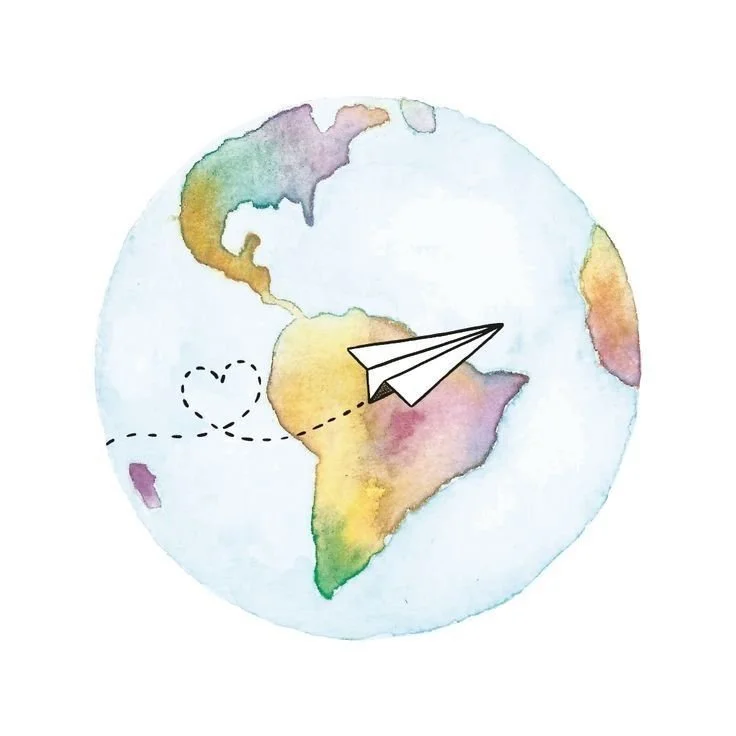
Perhaps it is also the story of learning that home can live in your language, your memories, your relationships, your values, and the person you are continuing to become.
You do not have to erase your past to participate in your present. You do not have to minimize your pain to prove that you are grateful. You do not have to fit neatly into one identity to belong.
You are allowed to change without avoiding where you came from. You are allowed to carry more than one culture, more than one truth, and more than one version of home.
Your identity is not being divided.-It is becoming more spacious.
Professional disclaimer: This article provides general psychoeducation and opportunities for personal reflection. It is not psychotherapy and does not replace individualized mental health or medical care. If immigration-related stress is significantly affecting your well-being or daily life, consider connecting with a qualified mental health professional who can understand your unique circumstances, culture, and needs.
