
ADHD Is More Than What You Can See: Understanding ADHD Beyond the Stereotypes
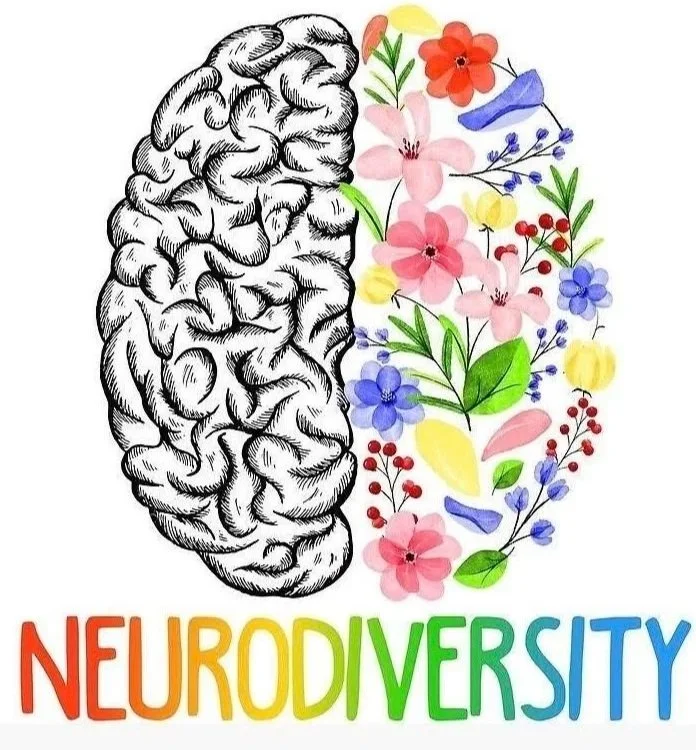
There is no single “right” way for a brain to work!
October is ADHD Awareness Month.
Today, information about ADHD is everywhere. We hear about executive dysfunction, hyperfocus, time blindness, dopamine, forgetfulness and the experience of having a “busy brain.”
That increased awareness can be helpful. For some people, learning about ADHD finally gives language to experiences they have struggled to understand for years.
But awareness is not always the same as understanding.
ADHD is not simply being distracted, energetic, forgetful or “bad at focusing.” And it is more than a collection of relatable habits.
So perhaps a better question for ADHD Awareness Month is not only:
“What are the symptoms?”
but also:
“What can it actually feel like to live with ADHD?”
What Is ADHD?
Attention-Deficit/Hyperactivity Disorder (ADHD) is a neurodevelopmental disorder involving an ongoing pattern of inattention and/or hyperactivity-impulsivity that can interfere with daily functioning.
ADHD can also affect executive functioning skills such as planning, organizing, managing time, remembering information, starting tasks, shifting between tasks and following things through.
This can create a frustrating experience:
“I know what I need to do. Why am I having such a hard time doing it?”
Knowing and doing are not always the same thing.
What We See Isn't Always the Whole Story
Someone may appear to be procrastinating on an important email.
What we cannot see is that they may have opened it several times, rewritten the first sentence, felt guilty about not responding and repeatedly promised themselves they would finish it later.
Someone may arrive late and appear careless.
What we may not see is difficulty estimating time, transitioning between activities or realizing how many small steps need to happen before leaving.
This does not mean ADHD removes responsibility.
It means behaviour often makes more sense when we understand what is happening underneath it.
And understanding gives us more useful options than shame does.
What ADHD Is — and What It Isn't
ADHD is not laziness.
It is not low intelligence.
It is not a lack of caring.
It is not caused by poor parenting.
And it does not automatically disappear in adulthood.
But ADHD is also not every experience of distraction, procrastination, forgetfulness or overwhelm.
Most people experience some of these things occasionally. ADHD involves a persistent pattern that meaningfully affects important areas of life.
There can also be overlap between ADHD-like experiences and stress, sleep difficulties, anxiety, depression, trauma and other health concerns.
This is why social media can educate us, but it cannot diagnose us.
There Is No One Way to “Look ADHD”
One person may be visibly restless.
Another may appear calm while their mind feels constantly busy.
Someone may frequently lose things.
Someone else may seem extremely organized because they rely on calendars, alarms, routines and reminders.
A person may struggle academically.
Another may perform very well while using enormous amounts of energy to stay organized.
Sometimes we only recognize difficulty when it becomes visible.
But coping well on the outside does not always tell us how much effort is happening on the inside.
“I Have ADHD” or “ADHD Is Part of Who I Am”?
Language around ADHD can be deeply personal.
Some people prefer to say:
“I have ADHD.”
This is often called person-first language. It emphasizes that ADHD is one part of the person rather than the whole of who they are.
Others experience ADHD as closely connected to their identity. They may describe themselves as neurodivergent, an ADHDer, or feel that ADHD shapes how they think, learn, communicate and experience the world.
Neither approach is automatically more correct.
A diagnosis can be part of someone's identity without becoming their entire identity.
People are allowed to choose the language that feels most respectful and meaningful to them.
What About the Word “Disabled”?
The same complexity exists around disability language.
Some people with ADHD identify as disabled or as a person with a disability. Others do not connect with that language.
For one person, the word disabled may feel uncomfortable because it has been associated with weakness or inability.
For another, it may feel validating.
It may shift the story from:
“Why can't I manage things the way everyone else seems to?”
to:
“Some environments and expectations genuinely require more support from me.”
Identifying as disabled does not mean seeing yourself as incapable.
And choosing not to use that label does not mean denying your difficulties.
There does not have to be one correct relationship with a diagnosis or label.
A Diagnosis Can Change the Story
Many people grow up hearing messages such as:
“You have so much potential.”
“You just need to apply yourself.”
“Why can't you be more organized?”
“You need to try harder.”
Over time, difficulty can start to feel like a character flaw.
A diagnosis cannot erase those experiences.
But it can offer another way of understanding them.
There is a meaningful difference between:
“I struggle because something is wrong with me.”
and:
“I struggle because some things require more support than I understood before.”
That shift is not about removing accountability.
It is about replacing unnecessary self-judgment with useful information.
Support Isn't About Trying Harder
Understanding ADHD can help us ask better questions.
Instead of:
“Why can't I remember anything?”
We might ask:
“What system could help me rely less on memory?”
Instead of:
“Why am I so bad at starting things?”
We might ask:
“How can I make the first step smaller or clearer?”
Instead of:
“Why can't I just be more disciplined?”
We might ask:
“What kind of structure helps me follow through?”
The goal is not to eliminate every challenge.
It is to understand your brain well enough to work with it rather than spending your life fighting against it.
ADHD Doesn't Have to Be a Superpower
ADHD is sometimes described as a “superpower.”
For some people, that language feels empowering. They may connect their ADHD experience with creativity, curiosity, spontaneity or deep engagement with things they care about.
That experience is valid.
But ADHD does not need to become a superpower for us to remove shame from it.
For someone else, ADHD may create significant frustration, impairment or exhaustion.
That experience is valid too.
Empowerment can sound much simpler:
“This is part of my experience. Some parts are difficult. Some parts may contribute to things I value about myself. And I am learning what helps me.”
Maybe Awareness Can Become Curiosity
ADHD Awareness Month is an opportunity to learn about symptoms, diagnosis and support.
But perhaps awareness can go one step further.
Toward curiosity.
Toward listening.
Toward recognizing that two people with the same diagnosis can have very different experiences.
Someone is more than their diagnosis.
But we also do not need to pretend a diagnosis has no influence on how they experience the world.
Both can be true.
So instead of deciding what ADHD should look like or how someone should describe themselves, perhaps we can ask:
“What is this experience like for you?”
That may be one of the most human forms of awareness we can offer.
This article is intended for general psychoeducation and does not replace individualized assessment, diagnosis or treatment. Experiences of ADHD vary from person to person. If you have questions about whether ADHD may be affecting you, consider speaking with an appropriately qualified healthcare professional.
Learn More
CADDRA – Canadian ADHD Resource Alliance
Evidence-informed Canadian ADHD resources.
CADDAC – Centre for ADHD Awareness, Canada
ADHD education, advocacy and support.
CDC – ADHD
General information about ADHD across the lifespan.
