
Truth, Trauma, and Healing: A Therapeutic Reflection on the National Day for Truth and Reconciliation
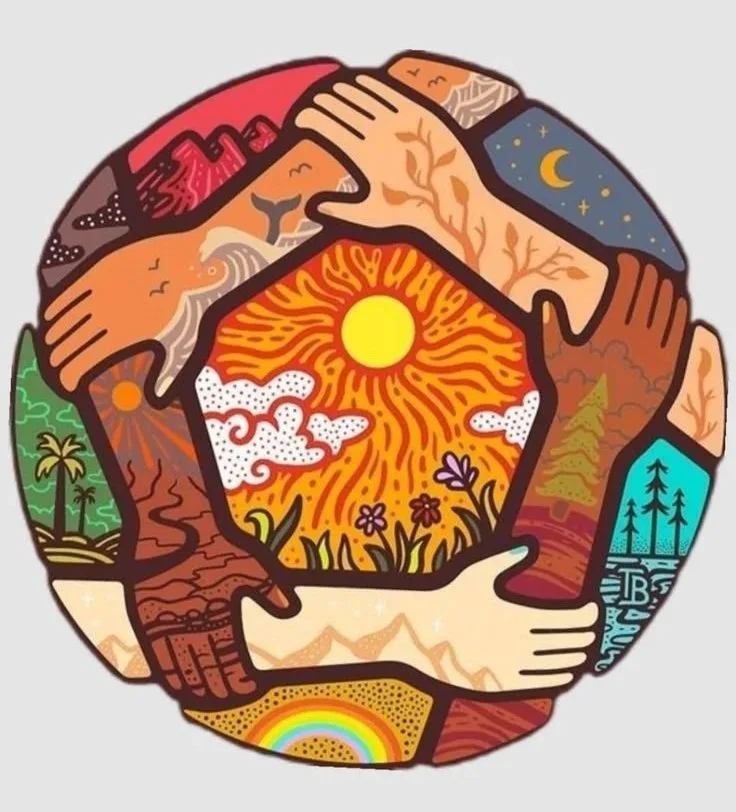
September 30 | National Day for Truth and Reconciliation & Orange Shirt Day
Some experiences do not end when the event itself ends.
They can live on through relationships, through the ways safety is experienced, through connection to identity and belonging, and through families and communities across generations.
On September 30, Canada observes the National Day for Truth and Reconciliation, alongside Orange Shirt Day. It is a day to honour Survivors of the residential school system, remember the children who never returned home, and recognize the families and communities who continue to experience its lasting impacts.
It is also an invitation to listen and learn—not only about what happened, but about why its effects continue to matter today.
Understanding Trauma Beyond the Individual
In therapy, we often understand trauma as more than the memory of something painful.
Trauma can affect the nervous system, relationships, trust, emotional regulation, identity, connection, and a person's sense of safety in the world. When harm occurs repeatedly or within systems that were supposed to provide protection, its effects can become particularly complex.
But trauma does not exist only at the individual level.
Intergenerational trauma helps us understand how the effects of profound and prolonged harm may continue across generations. Experiences such as forced separation from family, suppression of language and culture, discrimination, loss of community connections, and systemic oppression can have consequences that extend far beyond the people who directly experienced them.
Canada's residential school system forcibly separated Indigenous children from their families and communities and was designed to assimilate Indigenous children. Its ongoing effects continue to be felt among First Nations, Inuit and Métis individuals, families, and communities.
Recognizing this history is important because mental health does not develop in isolation. Our emotional wellbeing is shaped by relationships, family, culture, community, identity, history, and the environments in which we live.
Safety Is More Than the Absence of Danger
One of the foundations of trauma-informed therapy is safety.
But feeling safe is not simply about being physically protected.
Psychological safety can also mean being able to speak without fear of being dismissed. It can mean having your identity respected, feeling connected to your culture and community, having choice and autonomy, and knowing that your experiences will not be minimized.
When children are separated from caregivers, communities, languages, traditions, and familiar ways of life, these fundamental experiences of safety, attachment, identity, and belonging can be profoundly disrupted.
Understanding this helps us move away from asking:
“What is wrong with this person?”
and toward a more compassionate question:
“What has this person, family, or community experienced?”
Yet even that question requires humility. Indigenous Peoples should never be understood only through a lens of trauma. Indigenous cultures, communities, and histories also carry strength, knowledge, resistance, connection, continuity, and resilience. Is Not the Same as Forgetting
Therapy sometimes carries an unhelpful assumption that healing means reaching a place where something no longer hurts.
Healing can be much more complex than that.
There is no single timeline for grief or trauma. There is no requirement to forgive in order to heal. And acknowledging anger, sadness, grief, or injustice does not mean someone has “failed” to move forward.
Healing may instead involve rebuilding safety, reclaiming identity, reconnecting with community, strengthening relationships, restoring choice, or finding ways to carry difficult experiences without allowing those experiences to define an entire person.
For Indigenous Peoples, healing may also include connections to land, language, family, community, spirituality, ceremony, traditional knowledge, storytelling, and Indigenous healing practices.
This is particularly important for mental-health professionals to remember.
Western psychotherapy is one approach to healing. It is not the definition of healing.
Culturally responsive care requires therapists to remain humble about the limits of their own knowledge and to respect the meaning that culture, community, spirituality, and traditional practices may hold for the people they support.
Why Cultural Humility Matters in the Therapy Room
Cultural humility is different from believing we can become completely “competent” in another person's culture.
It asks us to remain curious.
To notice our assumptions.
To recognize differences in power.
To listen when someone's understanding of wellness differs from our own.
And, importantly, to recognize when we do not know.
A culturally humble therapist does not assume that one therapeutic model, one understanding of family, or one definition of healing applies to everyone.
Instead, we can ask:
What does safety mean to you?
What parts of your identity or culture are important to your wellbeing?
Who or what helps you feel connected?
What does healing mean to you?
Sometimes therapeutic care is not about having the perfect intervention.
Sometimes it begins with creating enough space for another person's experience to be heard without immediately trying to explain, change, or fix it.
The Meaning Behind the Orange Shirt
Orange Shirt Day began with the experience of residential school Survivor Phyllis Webstad, whose new orange shirt was taken from her when she entered residential school as a six-year-old child.
What began with one child's experience grew into an Indigenous-led movement centred on the message that Every Child Matters.
The orange shirt can therefore represent much more than something we wear on September 30.
From a therapeutic perspective, its message can also remind us of fundamental human needs: to feel valued, protected, connected, respected, and worthy of care.
For a child, being seen and knowing that they matter can be foundational to emotional development.
For Survivors, families, and communities whose experiences were historically dismissed or silenced, listening and acknowledging the truth matters too.
Reconciliation Cannot End on September 30
Wearing orange can be a meaningful act of remembrance and solidarity.
But wearing a shirt is not the completion of reconciliation.
Neither is reading one article, attending one event, or posting something once a year.
Reconciliation asks for continued learning, listening, reflection, and action.
For those of us working in mental health, it can also mean continuing to examine how our profession understands trauma and healing, learning about the historical and present-day experiences of Indigenous Peoples, recognizing barriers within healthcare systems, and making space for Indigenous knowledge and approaches to wellness.
For everyone, September 30 can offer an opportunity to reflect:
What have I learned?
Whose voices have I been learning from?
What assumptions might I still carry?
How can I continue learning after today?
We cannot change history by looking away from it.
But we can choose how carefully we listen to its truth, how respectfully we hold the experiences of those affected by it, and what we carry forward into the relationships, communities, professions, and systems we are part of.
Truth deserves to be heard. Experiences deserve to be acknowledged. Culture and identity deserve to be protected. And healing deserves to happen in ways that honour the person, family, and community experiencing it.
On September 30, we honour Survivors, their families and communities, and remember the children who never returned home.
And beyond September 30, the work of listening, learning, and reconciliation continues.
Support Is Available
Learning or talking about residential schools may bring forward painful emotions, memories, or experiences. You do not have to navigate those feelings alone.
Hope for Wellness Help Line
For First Nations, Inuit and Métis Peoples across Canada
Available 24 hours a day, 7 days a week
1-855-242-3310
Residential School Crisis Line
For residential school Survivors and their families
Available 24 hours a day
1-866-925-4419
Continue Learning
National Centre for Truth and Reconciliation (NCTR)
Learn about residential schools, Survivor experiences, reconciliation, and the Truth and Reconciliation Commission's Calls to Action.
Orange Shirt Society
Learn about Phyllis Webstad's story, the origins of Orange Shirt Day, and Indigenous-led educational resources.
Government of Canada — National Day for Truth and Reconciliation
Information, educational resources, commemorative activities, and mental-health supports.
A Note About This Article
This article is intended for general psychoeducation, reflection, and awareness. It is not intended to speak on behalf of Indigenous Peoples, Survivors, families, or communities, nor can one article represent the diversity of Indigenous experiences, cultures, histories, and approaches to healing.
The therapeutic perspectives shared here are offered through a trauma-informed and culturally humble lens and are not a substitute for Indigenous-led knowledge, teachings, resources, or culturally appropriate care. Readers are encouraged to continue learning directly from Indigenous voices, organizations, Survivors, and communities.
This content is for educational purposes only and does not constitute psychotherapy, mental-health assessment, diagnosis, or individualized clinical advice.
