
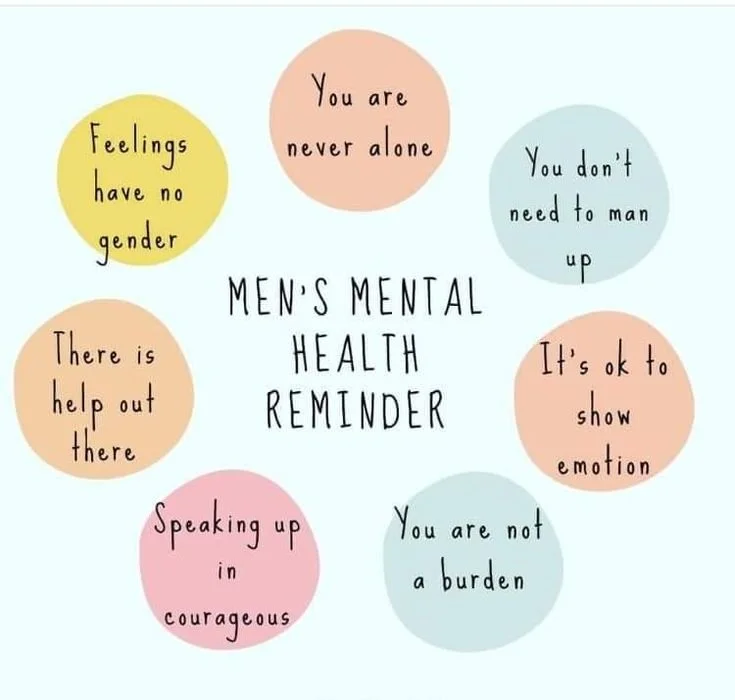
“Be strong.” “Don't cry.” “Figure it out.” “You need to be the man of the house.”
For some boys and men, these messages become familiar long before they have the opportunity to understand what they feel, what they need, or how to ask for support.
Sometimes, these expectations are communicated directly. Other times, they are learned through family relationships, cultural traditions, social environments, or observing how others respond to vulnerability.
But what happens when someone learns to be there for everyone else while struggling to make space for themselves?
In recognition of International Men's Day (November 19) and Movember, let's explore men's mental health with curiosity, compassion, and a deeper understanding of the experiences that can shape emotional well-being.
Understanding Masculinity Without Stereotypes
There is no single way to be a man.
Masculinity is shaped by personal identity, relationships, culture, upbringing, and lived experiences. For some, qualities such as independence, resilience, and responsibility are meaningful sources of pride and connection.
These qualities are not inherently harmful.
However, difficulties may arise when expectations become rigid: when independence means never needing help, strength means never showing vulnerability, or responsibility means placing everyone else's needs before your own.
Research suggests that stronger adherence to certain restrictive masculine norms is associated with less favourable attitudes toward seeking psychological support.
This does not mean men are naturally less emotional or less willing to connect. Rather, it invites us to consider how experiences and expectations may influence what feels safe to express.
Emotional Distress Doesn't Always Look the Way We Expect
When we think about mental health difficulties, we might imagine sadness, crying, or openly expressing emotional pain.
Yet distress can appear differently across individuals.
For some men, it may show up as:
Increased irritability, frustration, or anger.
Withdrawing from relationships or activities they previously enjoyed.
Difficulty sleeping, fatigue, or physical tension.
Staying constantly busy to avoid uncomfortable feelings.
Feeling overwhelmed but struggling to explain why.
Becoming increasingly self-critical or feeling inadequate.
These experiences are not exclusive to men, nor do they automatically indicate a mental health condition.
They can, however, be meaningful signals that someone may need understanding, connection, or additional support.
Sometimes, “I'm just tired” carries more emotional weight than we initially recognize.
Why Can Asking for Help Feel Difficult?
Imagine growing up believing that your value comes from being dependable, successful, and capable of handling difficulties independently.
Now imagine experiencing something you cannot easily fix.
For some men, asking for support may bring feelings of shame, uncertainty, or fear of disappointing others.
Others may struggle to identify what they're experiencing because emotional expression was rarely encouraged or modelled.
It's also important to recognize that barriers extend beyond personal beliefs. Financial pressures, discrimination, cultural expectations, limited access to services, and previous negative experiences with healthcare can all influence help-seeking.
Men's experiences also vary across gender identity, sexual orientation, disability, and cultural background.
Understanding these barriers isn't about making excuses for harmful behaviours. It's about approaching people with curiosity rather than assumptions.
Instead of asking, “Why won't he talk about his feelings?” we might consider, “What has he learned about what happens when he does?”
How Can We Better Support the Men in Our Lives?
Supporting someone doesn't require having all the answers. Often, what matters is creating opportunities for connection without demanding immediate disclosure.
1. Notice changes without making assumptions.
Try: “I've noticed you've seemed a little quieter lately. How have things been for you?”
2. Listen before trying to solve the problem.
Rather than immediately offering advice, ask: “Would it help to talk about it, or would you prefer that I simply listen?”
3. Make room for different ways of connecting.
Not every meaningful conversation happens face-to-face. Some people feel more comfortable opening up while walking, driving, sharing an activity, or spending time together.
4. Validate feelings without minimizing them.
Instead of “Don't worry about it,” consider: “That sounds like a lot to carry. I can understand why it's been difficult.”
5. Respect boundaries while keeping the door open.
If someone isn't ready to talk, you might say: “That's okay. You don't have to explain anything right now. I'm here if you want to talk another time.”
6. Encourage support without shame.
Professional support can be introduced as an option rather than an ultimatum. You might offer to help explore resources, while respecting the person's autonomy.
Movember's ALEC approach offers a useful reminder: Ask, Listen, Encourage Action, and Check In. Support is often an ongoing conversation, not a single moment.
What About the Men Reading This?
Perhaps you've become accustomed to managing everything independently.
Perhaps expressing emotions feels uncomfortable, or you've never really considered how much you're carrying.
You don't need to change your personality or communicate in a particular way to begin understanding your emotional needs.
You might start by gently asking yourself:
When I'm struggling, what do I usually do?
What did I learn growing up about sadness, fear, or vulnerability?
Do I feel comfortable receiving the same support I offer others?
What would feeling emotionally supported look like for me?
There are no right or wrong answers. These questions are simply invitations to understand yourself with greater curiosity and compassion.
Psychotherapy can also offer a confidential, collaborative space to explore these experiences at your own pace, without expectations about how you should feel or express yourself.
A Different Understanding of Strength
Perhaps supporting men's mental health isn't about asking men to become more vulnerable.
Perhaps it's about creating relationships, communities, and environments where vulnerability is no longer treated as something that diminishes their worth.
Where being responsible doesn't require carrying everything alone.
Where emotional expression is met with understanding rather than judgment.
And where receiving support is as acceptable as offering it.
Every man deserves the opportunity to feel heard, understood, respected, and supported—not only during moments of difficulty, but throughout everyday life.
As we recognize International Men's Day and Movember, let's remember that meaningful change extends beyond awareness.
It begins in how we listen, how we respond, and how we make space for one another.
Because no one should have to earn the right to be supported by appearing strong all the time.
Resources and Further Reading
Movember Conversations – Practical Tools for Supporting Men's Mental Health
Research: Men's Mental Health, Masculinity Norms, and Help-Seeking
This article is intended for general psychoeducation and reflection. It is not a substitute for individualized mental health assessment or psychotherapy.
